BUSES AND BEGGING BOWLS: The Choreography of Control and Africa’s Crisis of Self-Respect.
By: Comrade Barry Chukwunyem Anuchi
The moral and historical continuum of Pan-African, anti-imperialist, and patriotic resistance traditions reminds us that Africa’s redemption has never been expected to come from Western benevolence. It has always been framed as an internal renaissance, a rediscovery of discipline, unity, and self-respect. Yet the spectacle that now greets African leaders at Western-hosted summits tells a tragic story of how far the continent has drifted from that founding creed.
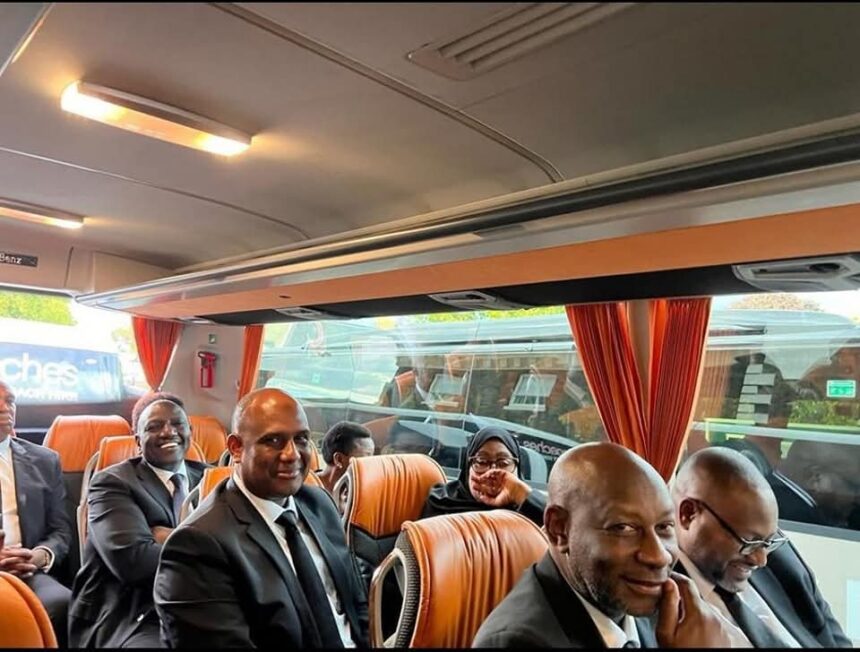
The modern diplomatic ritual is painfully symbolic. African presidents arrive, not as equal partners, but as managed guests bused, choreographed, photographed, and lectured. Development is promised in the language of charity rather than in the grammar of partnership. This is not diplomacy; it is theatre. A carefully staged performance in which sovereignty is replaced by spectacle and dignity is traded for access.
This choreography of control is not imposed solely by external powers; it is sustained by Africa’s own poverty of vision. The continent is not poor in resources. It is poor in resolve. Blessed with oil, arable land, minerals, and one of the youngest populations on earth, Africa remains dependent because its leadership has not converted potential into power. The begging bowl has replaced the blueprint.
Yet history tells a different story of who Africans once were and who they can still become.
The founding generation of Africa’s independence movement understood that freedom was meaningless without economic and psychological emancipation. Kwame Nkrumah warned that neocolonialism would succeed where colonialism had failed, turning aid into a weapon of control. Julius Nyerere preached self-reliance as a moral duty, not a development option. Patrice Lumumba died insisting that Congo’s wealth must serve Congolese people, not foreign shareholders. Their politics were not perfect, but their dignity was uncompromising.
Thomas Sankara took that legacy further. By rejecting foreign aid and reforming Burkina Faso from the ground up, he demonstrated that sovereignty is not a slogan but a discipline. His revolution of integrity modest living, industrial self-sufficiency, gender inclusion, and environmental renewal – was a rebuke to dependency politics. His assassination was not merely the silencing of a leader; it was the interruption of an idea: that Africa could govern itself with pride.
Nelson Mandela, in a different register, restored Africa’s moral authority on the global stage. He taught that reconciliation is not weaknes but the highest form of strength. His leadership proved that dignity is the most persuasive form of power. It was not money that won South Africa respect, but moral legitimacy.
So, too, with Nasser and Gaddafi, who challenged financial and political subjugation. Whether through the nationalization of the Suez Canal or the dream of African financial autonomy, they represented a belief that Africa could negotiate with the world as a bloc, not as a beggar.
Compare this lineage with today’s reality. Leaders now govern like expatriates. They treat their nations as extraction zones, not as civilizations. They import fuel despite sitting on oil, export students instead of building universities, and travel abroad for medical treatment while their hospitals decay. In countries like Nigeria, the betrayal is particularly raw: public servants die waiting for pensions while politicians accumulate estates overseas. This is not mismanagement; it is a moral collapse.
What we are witnessing is not merely a development crisis but a crisis of self-respect. People who do not honour themselves cannot command honour from others.
The road back to dignity is neither mysterious nor romantic. It begins with discipline: fixing electricity before chasing summits, funding universities before signing aid deals, and building factories before attending donor conferences. It requires unity, a serious continental commitment to regional markets, shared infrastructure, and collective bargaining. It demands leaders who see minerals, manpower, and markets not as begging tools but as leverage.
The humiliation of being bused to world forums will end only when Africa learns to drive its own destiny. Not with slogans, but with institutions; not with pity, but with production.
Pan-Africanism was never about hating the West. It was about loving Africa enough to refuse humiliation. It was about believing, stubbornly, and defiantly, that Africa could rise by its own hands.
The buses will stop rolling the day African leaders rediscover the moral architecture of their forebears, the courage of Nkrumah, the integrity of Sankara, the humanism of Mandela, the self-reliance of Nyerere, the defiance of Lumumba. When Africa values itself again, the world will have no choice but to do the same.