

ABURI: THE ACCORD THAT FAILED TO SAVE NIGERIA
Why General Gowon owes Nigerians the truth
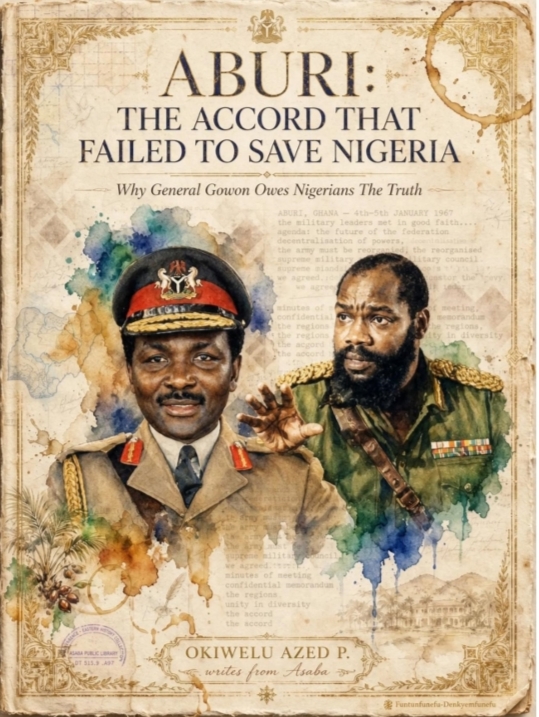
It is my belief that General Yakubu Gowon needs to give Nigerians, the world and future generations an honest account of what truly transpired at Aburi Agreement.
Why was the agreement that could have saved Nigeria from civil war was never fully implemented. I find it difficult to accept that this was justified by claims that he fell ill after the meeting in Ghana. In reality what really happened? Why did a deal that was intended to save Nigeria from going to war result in one of the bloodiest wars in Africa’s history? Well we can ask General Gowon as he is still alive.
For me, the Aburi Accord was unarguably the last real chance Nigeria had to avoid a civil war. On the 4th and 5th January 1967 General Gowon met Lieutenant-Colonel Chukwuemeka Odumegwu Ojukwu in Ghana to try to find a resolution to the problems that had occurred following the January coup, July counter-coup and the massacre of thousands of Easterners, especially the Igbo in the North. For a brief moment there was a glimmer of hope for Nigeria however, it was quickly dashed as the country went into devastating war.
The accord was aimed at regaining trust between the regions and the Federal
Government. This included restructuring the armed forces and making sure major decisions were made collectively.
Legislative and executive powers would be held within the Supreme Military Council (SMC). All major decisions would have to be approved by the council. Where meetings could not be held, then military governors would be consulted for their opinion. Major appointments within the police force, diplomatic service, senior civil servants and statutory corporations would also need to be approved by the SMC.
The armed forces would be restructured into regional commands. The military governors would have control over their region’s internal security. There would be a military headquarters with equal representation from each region.
Both parties resolved to review all decrees made since January 1966 and to consult on any outstanding issues. And pursue negotiation instead of violence.
Overall this seemed to be a fair attempt to hold Nigeria together instead trouble was on the horizon.
Ojukwu believed that the deal meant that there would be a high degree of autonomy for the regions and that the Federal Government could no longer make unilateral decisions. However, Gowon and the Federal Government seemed to believe that it would mean increased consultation and devolution, whilst still keeping central authority and having a united army.
Ojukwu returned to the East saying that ‘we stand on Aburi’. Meanwhile, Gowon did not agree with this, particularly with the military governors having control over their area commands. He stated that the Federal Government had never agreed to form a confederation or the right to secede by any region.
It was sad that the deal that was meant to save Nigeria ended up causing more division within the country. The country was on its knees after the coups and massacres. The country was already severely damaged. There was already a lack of trust throughout the country and millions had lost faith in the Federal Government to protect them. This is why Aburi accord was so important. There would have been an opportunity to move past our differences and create a viable solution. Unfortunately, the lack of trust, different interpretations and misjudged politics and decisions got in the way. Perhaps the characters and egos of the two young military men also made a difference. Whatever the reasons the outcome was catastrophic. And many never got to tell their stories. Their lives meant much more than the pride, position and rivalry of these men.
In March 1967, the Federal Government issued Decree No. 8, claiming it was implementing the terms of the Aburi accord. However, this was rejected by the East as it did not reflect what was agreed upon and gave too much power to the Federal Government. Gowon claimed they never agreed to give any regions the right to secede.
In May 1967 Gowon’s government decided to create 12 states. This increased the fear of the Eastern Region being political and economic marginalisation. On 30th May, Ojukwu declared independence of the Republic of Biafra. And by July Nigeria was at war.
Whilst it is unfair to place the blame solely on Gowon and Ojukwu having different views on what had been agreed, the country was already splitting apart. The situation was already very tense after the coup in January 1966, the counter-coup in July, massacre of Easterners in the North and the pogroms forcing hundreds of thousands of Igbo to flee to the East. The inability to resolve the disagreement over Aburi, Decree No. 8 and creating 12 states only made matters worse.
However, these decisions cannot be justified. Those in positions of power should have kept their tempers in check and considered the human impact of their actions. Unfortunately they did not.
I cannot write about the Nigerian Civil War without mentioning the Asaba Massacre. A large number of civilians were killed in Asaba by the federal troops in October 1967. Many were unarmed and believed the soldiers to be friendly.
Being from Asaba, I do not view this as a distant event I can read about in a history book.
This is a wound that has been inflicted on my people’s history.
This happened during Gowon’s time in power as the Federal Military Government. As head of state and commander in chief, I believe the actions of his government and military should be given serious consideration of how involved he was. Whatever the outcome, we must never downplay the suffering these victims went through.
Whilst Gowon and Ojukwu had different opinions on what had been agreed. The minutes from the meeting, Decree No. 8, relevant broadcasts and memoirs can be reviewed to get a clearer picture. We should not be swayed by our loyalty to either of them. Gowon should be honest about the events following the meeting in Ghana. If he was unable to act due to being unwell then he should explain why.
If there were disagreements within the Federal
Government or other factors that meant the deal could not be implemented then he should tell us. I am not asking him to take full blame for everything that occurred during the war. I simply want him to be honest about his decisions and the role his government played.
Nigerians deserve to know the truth.
General Gowon is still alive and many of those that sat around the table in Aburi are no longer with us. We are running out of time to get the full story from those directly involved. He still has the opportunity to tell Nigerians what happened, admit that people suffered and provide a genuine apology to those who lost loved ones.
An apology will not bring back those who died, it would mean a lot to families who have waited decades to hear that they suffered. For the people of Asaba an apology would not be a favour, it would be long overdue.
I want General Gowon to set aside any pride he may feel and approach this dark period of our history with humility. It takes great courage to admit that your decisions have caused untold anguish to people. An apology is not taking personal responsibility for every atrocity committed during a war, it shows you have a conscience and are humane.
I am not asking to rewrite history to make one man the villain. However all involved should not be exempt from questioning. Everyone involved in the decisions that led to Nigeria going to war must be prepared to answer for their actions. We cannot continue to ask the victims to stay quiet and expect their descendents to forget.
When a country is bleeding the last thing you should be worrying about is winning an argument. True leadership is also about what you are willing to admit.
General Gowon still has the chance to give Nigerians a straight answer about Aburi. He can give an insight into what happened, admit people suffered and help to close a painful chapter in our history. The dead cannot speak for themselves but those who are still alive can.
Even though Nigeria cannot change the past, we can face it with honesty, humility and humanity. For those who died, those who survived and generations to come and for the sake of conscience and posterity, the truth about Aburi should never be swept under the carpet with those involved.
Okiwelu Azed P. writes from Asaba.