


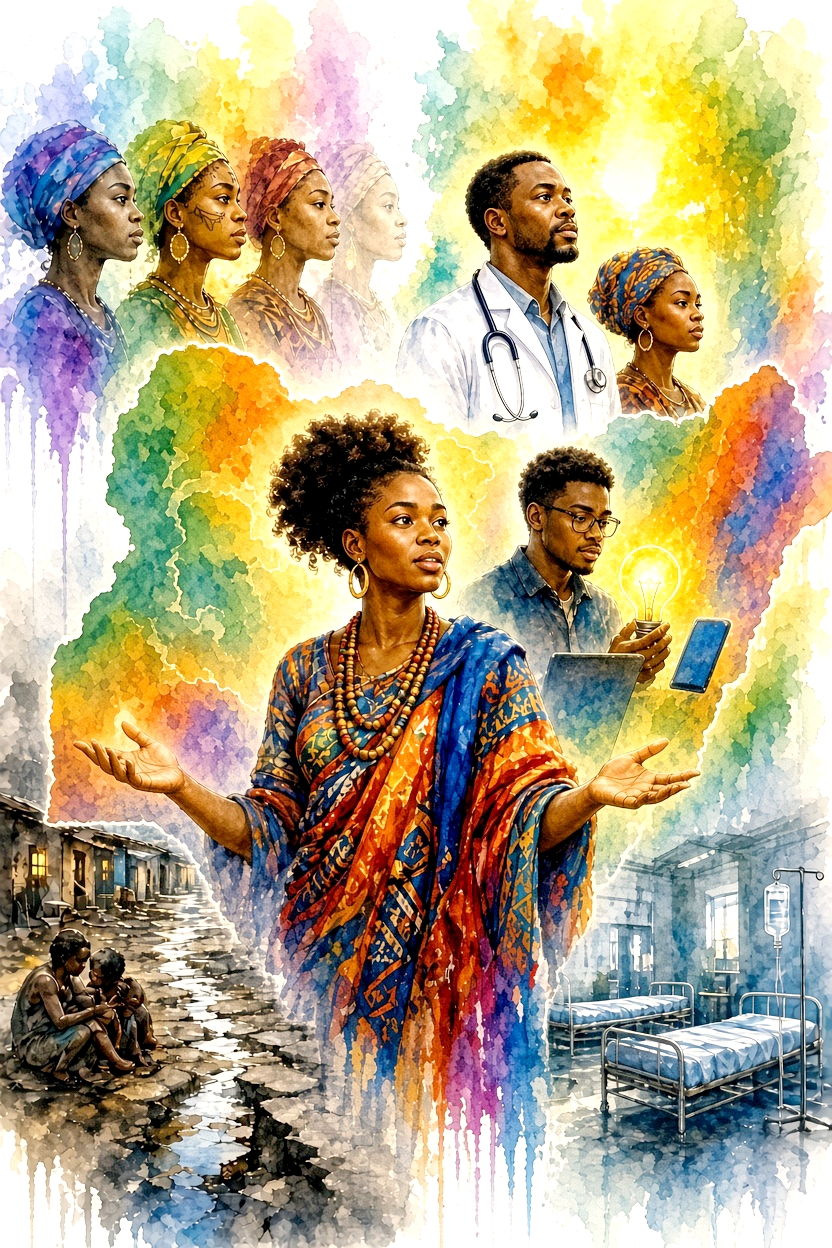
GREAT TALENT, BROKEN SYSTEM
A young South African woman’s message made me look beyond my resentment and confront some uncomfortable truths about Nigeria
I was about to swipe away a viral video featuring a young South African woman, whose message had the power to provoke an introspection I was not quite ready for. The reports of Nigerians facing xenophobic attacks in South Africa had made me reluctant to listen to what one of ‘their women’ had to say. However, I was stopped in my tracks and found myself considering what the young woman was saying.
The young woman’s message made me ask myself a question Nigeria has been asking itself, how come the country churns out great talents but fails to create the conditions for Nigerians to live decent lives?
Nigeria has doctors, artists, innovators, and entrepreneurs who thrive abroad. The country has a myriad of talented individuals who find greater opportunities in the land of their ancestors. But Nigeria cannot boast of good roads, consistent supply of electricity, and reasonably-priced meals. This is a country that has residents and citizens willing and able to compete with the best but has failed to create the right conditions for the ordinary Nigerians.
The young woman also challenged the tendency to tag Nigerians abroad as ‘drugs and looters,’ but ignore the millions of Nigerians living in host countries as ‘doctors, traders, drivers, and volunteers’ who work every day to earn a living and add value to the host countries. The young woman challenged us not to ignore the fortunes being made and lives being offered by those Nigerians willing to work and add value to their host countries.
We cannot pretend that Nigerians who break the laws of land or host countries are not Nigerians. But no country is perfect, so no country should be judged by the few who do wrong.
I found it refreshing that a South African woman had the courage to challenge xenophobia. It did not help that the xenophobic attacks often involved the theft of the properties of Nigerians. I do understand that those attacks are often a result of the frustration of host country citizens with the perceived ‘ungratefulness’ of Nigerians who take jobs away from locals. But I would have missed her message had I allowed my anger and frustration with xenophobia to override my desire to listen.
She also challenged Nigeria’s political leaders, especially FCT Minister Nyesom Wike and the water project, to stop with the spectacles and get Nigerians the basics of life.
Nothing much is wrong with minister Wike wanting to commission a water project. What the minister and his colleagues do not seem to understand is that the project will be a spectacle as long as it does not serve a purpose.
She also mentioned the story concerning the former Delta State Governor Ifeanyi Okowa, and the request by security agents for his passport to allow him go abroad for an urgent medical intervention.
She questioned why a man who had the opportunity to reform the state’s health sector and did not deliver, should be allowed to seek treatment abroad.
Seeking treatment abroad does not necessarily mean that a leader has failed, it could simply mean that the required treatment is not available in Nigeria or the local facility is not equipped to handle the ailment. The same argument does not apply to the governors and senators who have the resources to seek better medical options overseas but refuse to develop health services in Nigeria. The same argument applies to those who can afford to pay for medicines in local pharmacies but cannot provide functional hospitals for ordinary Nigerians.
The woman makes a pertinent observation about tribalism, the scourge of Nigeria, which conveniently allows ‘our son’ to mislead and ‘our daughter’ to misgovern. A tribe that has the numbers will always find reasons to continue to keep a person in government so that they can continue to reap the benefits of patronage and vote banks. This explains why every government that has come to power in recent times has failed to deliver on its promise to Nigerians. The young woman reminded us that it is this tribalism that ensures that whenever questions are asked on issues that concern the wellbeing of Nigerians, the questioners are reminded that they were born in the wrong village.
While the prices of goods and services are rising and the youth are unemployed, the Nigerians who should have responded to the challenges are busy fighting among themselves as to who among the tribes is more important. We are so tribalistic in Nigeria that we want ‘our man’ to win any election, but when he wins, we do not care about his record because he is ours. Unless we are in the tribe, we must oppose his policies and conduct our people in opposing his leadership. We fight along ethnic lines on everything, from insecurity to the economy, to the electricity shortage, to incessant protests and strikes. What does it gain us?
Unless we are tribalistic, we cannot answer the questions the woman was asking, such as why the security situation in Nigeria is not improving? Why is the Nigerian economy not taking off? Why are Nigerians dying from diseases that should not be here? Why is there not enough electricity to make the country industrialised? Why are children not going to school because of the burden of tuition fees?
The woman calls for Nigerians to rally around issues and hold political leaders accountable. We do have Nigerians who are willing to fight for justice but they must understand that the fight should not be in the form of xenophobia. Unless Nigeria is to continue to live in perpetual frustration and killings in the name of xenophobia or tribalism or politics or religious differences, we must agree that it is the issues that must unite us.
Nigeria has had people who protest and fight for justice. The problem is that Nigeria does not know how to consolidate these protests and use them as a catalyst for change. Democracy will never be properly consolidated unless Nigerians understand that it requires constant engagement, scrutiny, and accountability. Questioning a government should not be seen as ‘outing’ one’s ethnic group or being disloyal to one’s ethnic group.
I am still concerned about the xenophobic attacks in South Africa. No one should ever feel superior to another person because of the tribe they are born into. But I am glad I did not allow the resentment to prevent me from seeing a message worth listening to.
The young woman reminded me that the greatness of a nation is never measured by the achievements of its citizens abroad but by the comfort of living provided to its ordinary citizens. What is the point of having brilliant doctors, engineers, and innovators if ordinary Nigerians cannot receive basic healthcare? What is the point of having talented sports men and women if there are no stadiums? What is the point of having brilliant cooks if there are no restaurants? What is the point of having successful young people if there are no employment opportunities?
Nigeria is a land of talent, hardworking people, and resources. What it needs is good leadership that puts the public welfare first and good systems that will make it possible for Nigerians to live dignified lives.
Sometimes it is a message from an unexpected source that makes us look at matters differently. The important thing is, are we willing to listen?
Nigeria has great people. It is time for great leadership to emerge and for systems that will allow ordinary Nigerians to live happy lives.
Okiwelu Azed P. Writes from Asaba.